

As the EU Deforestation Regulation (EUDR) takes full effect, many paper producers face mounting pressure. The regulation requires companies placing wood-based products—including conventional paper—on the EU market to prove they do not come from deforested land or cause forest degradation. Non-compliance can lead to fines, market bans, and reputational damage.
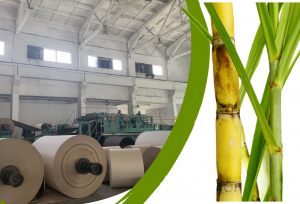
However, not all paper is affected. According to the latest regulatory interpretation, paper made from sugarcane pulp (bagasse) is generally exempt from EUDR’s deforestation due diligence requirements. Why? Because sugarcane is a herbaceous plant, not timber. The regulation’s definition of “wood” explicitly targets forest-derived materials, not agricultural residues like bagasse.
This creates a clear opportunity. For European buyers seeking hassle-free, fully compliant paper products, switching to sugarcane-based paper can eliminate the need for complex traceability reports, geolocation data, or deforestation risk assessments.
Sugarcane paper is not only EUDR-ready—it also offers strong environmental credentials. It uses an agricultural by-product, requires no additional tree felling, and often has a lower carbon footprint than virgin wood paper. It performs well for printing, packaging, and stationery applications.
For exporters aiming to stay competitive in the EU market, promoting sugarcane paper as a “no-risk, regulation-ready” alternative is a smart strategy. It removes legal uncertainty while reinforcing a genuine sustainability story.
Conclusion: When EUDR challenges wood-based paper, sugarcane paper becomes the solution. It’s time to rebrand bagasse paper as the future of compliant, responsible paper trade with Europe.
If you interested in our sugarcane paper, welcome to contact us.

Post time: May-08-2026